
 EN
EN ES
ESPDAS
Professional Distributed Acoustic Sensor
- <40 picostrain sensitivity
- Linear & Quantitative measurement
- 1, 2, 4, 6, 10, 20 and 50 meter spatial resolution (higher is possible)
- 1, 2 or 4 channels
- Up to 50 km reach
- Full remote control via http
- Data available via TCP streaming and H5
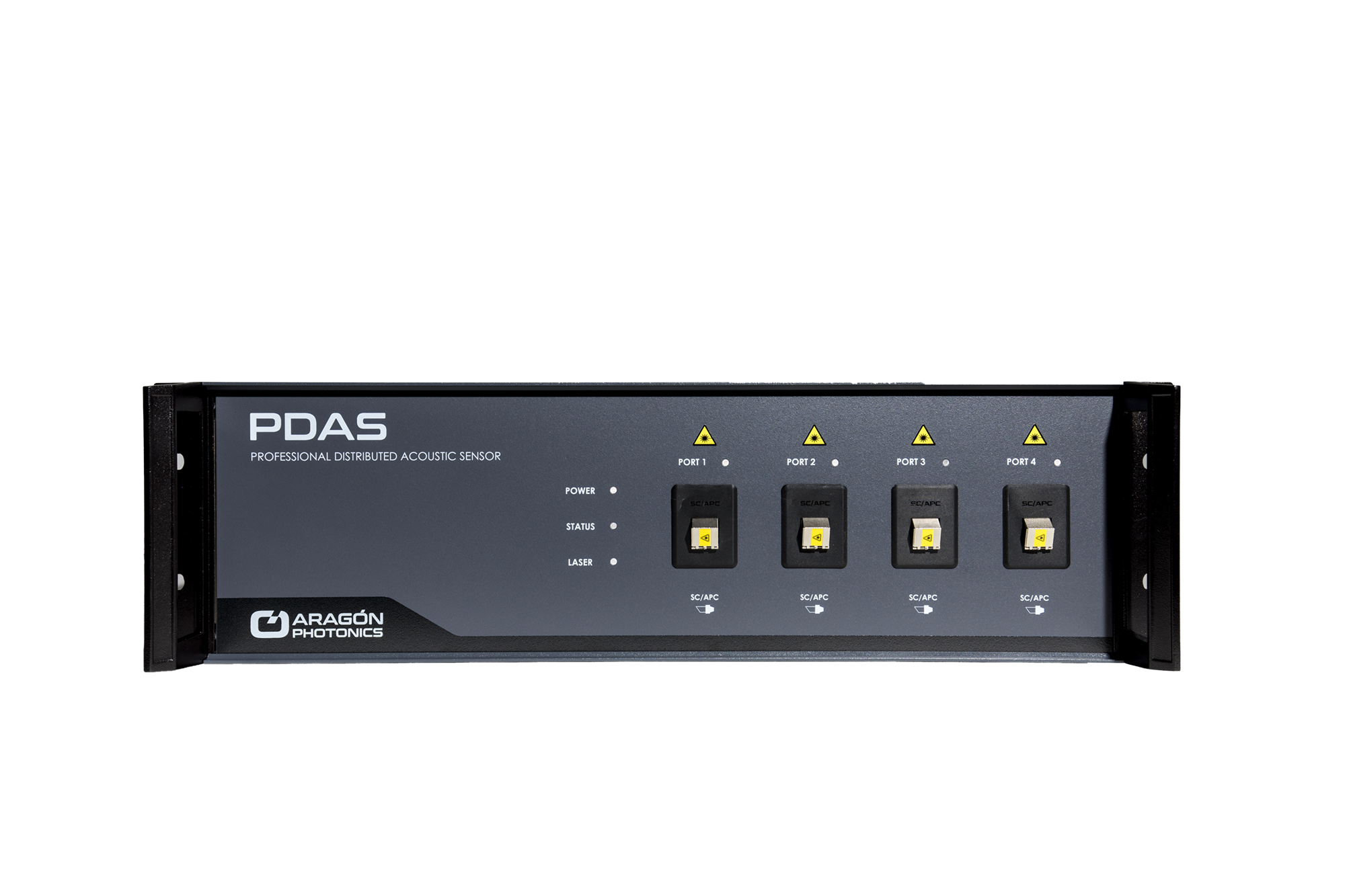
Cost-Effective Innovation for Civil Applications
Our Professional Distributed Acoustic Sensing (PDAS) solution redefines infrastructure monitoring by combining advanced performance with an optimized architecture tailored for the civil market. Unlike traditional monitoring systems, Aragon Photonics’ PDAS offers a low-cost alternative without compromising the ability to detect, locate, and classify vibrations with meter-level precision over tens of kilometers of standard fiber optic cable. It is the ideal tool for smart traffic management, perimeter security, and asset protection where economic efficiency is as vital as technical rigor.
We understand that innovation thrives on the flexibility for research and algorithm development. Therefore, we offer our PDAS interrogator as a stand-alone unit, enabling research centers, universities, and technology partners to acquire the hardware independently to develop their own applications and processing algorithms. This flexibility transforms our equipment into an open platform for creating customized solutions in diverse sectors such as seismology, leak detection, or structural health monitoring, always guaranteeing maximum transparency regarding its specifications and capabilities.
Linear measurement
Linearity implies that the measurement varies in proportion to variations in the perturbations received from the input. The absence of it causes harmonics to enter the signal, resulting in the disappearance of the original slope and preventing the observed perturbations from behaving as they truly would.
PDAS is linear, does not introduce harmonics.
The measurement changes in direct proportion to a change in the input perturbation.
PDAS provides advanced measurements, improving pattern analysis and reducing the number of incorrect classifications.
Quantitative measurement
A quantitative measurement provides the capability of quantifying the sensed perturbations, which means that each of those perturbations are detected as a concrete strain or temperature value and that their variations can be followed and characterized.
The detected variations are measurable as strain or temperature values.
Quantitative information is much more meaningful.
Thresholding becomes much easier reducing false alarms.
Images
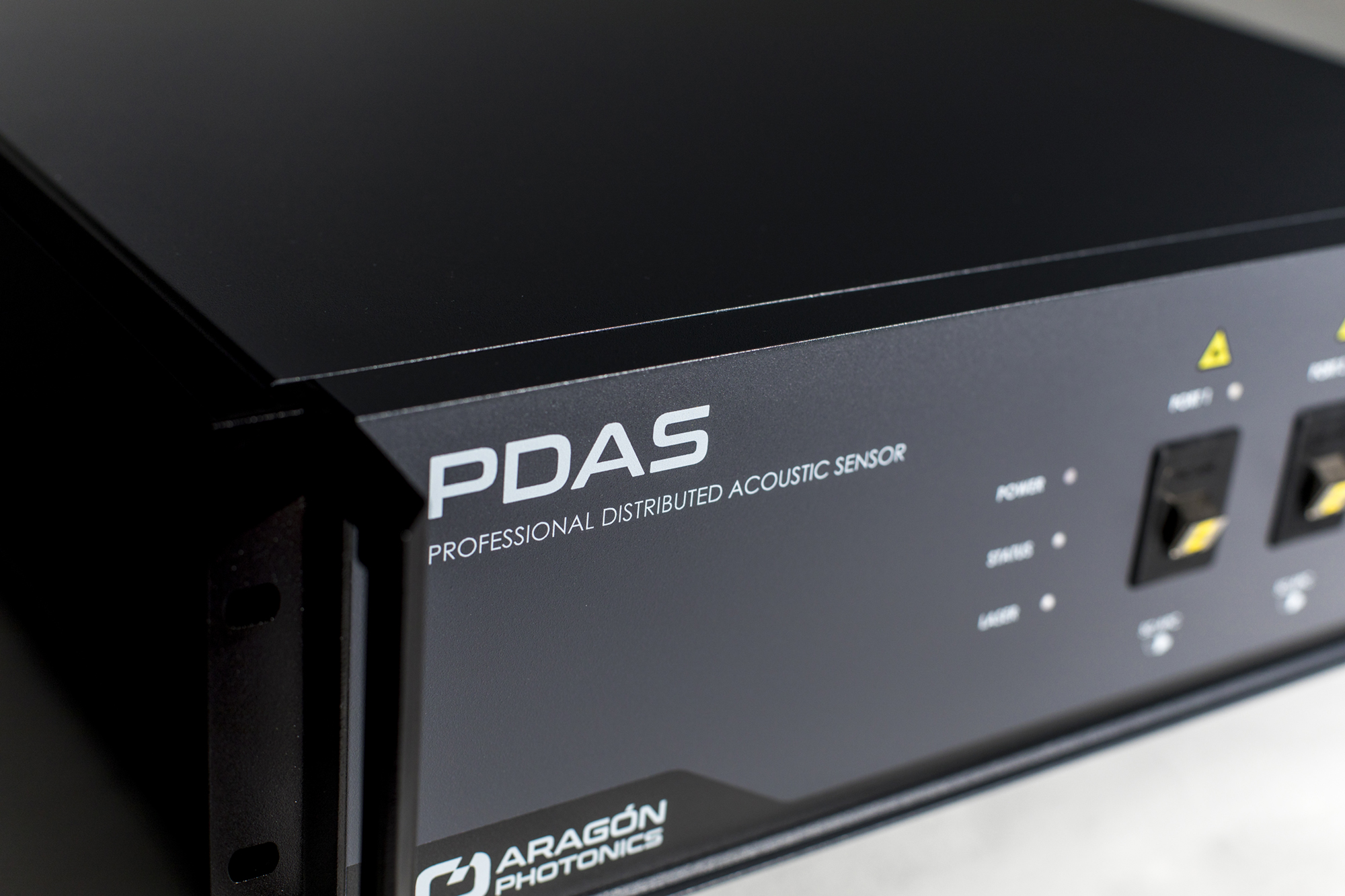
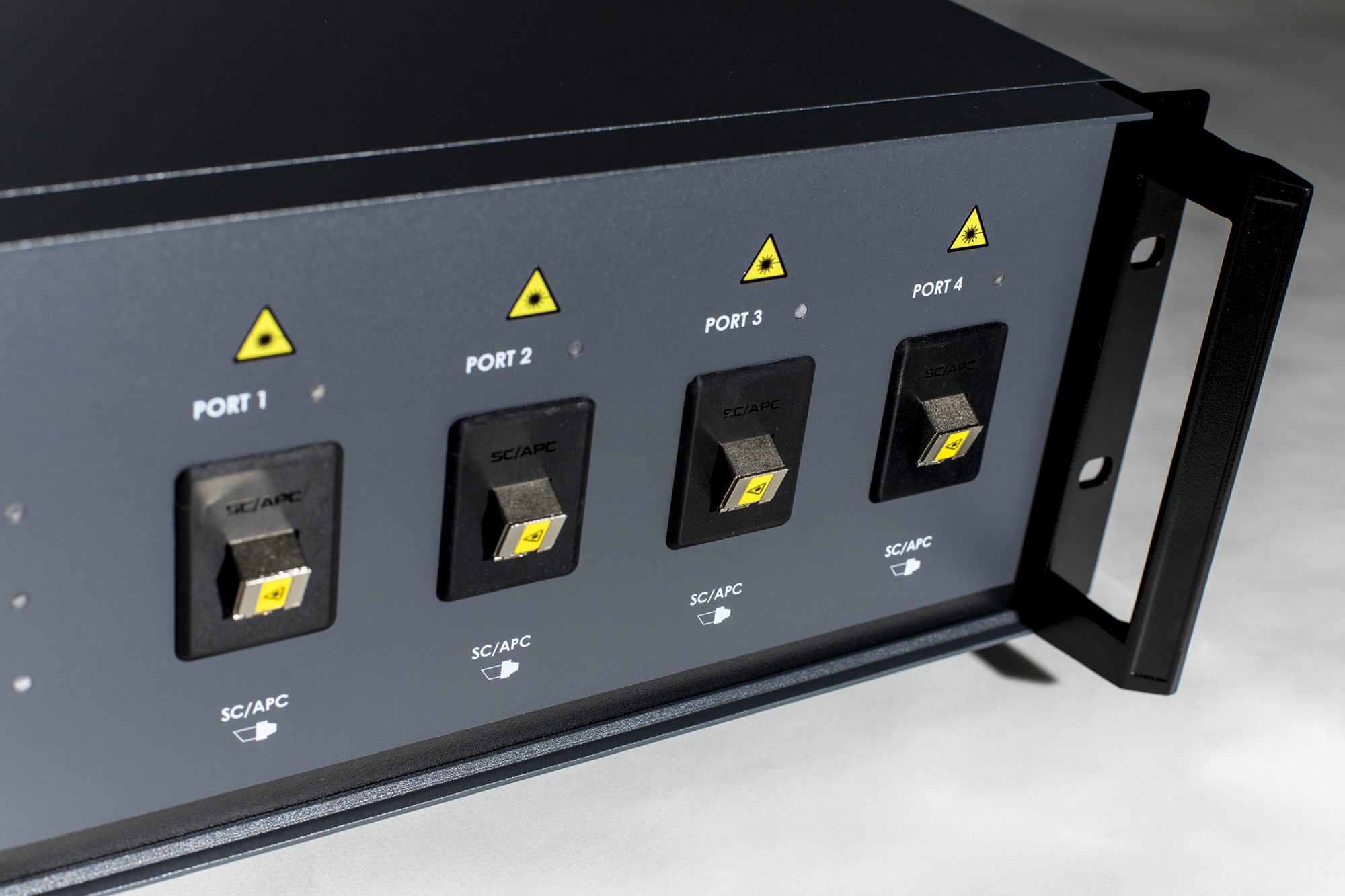
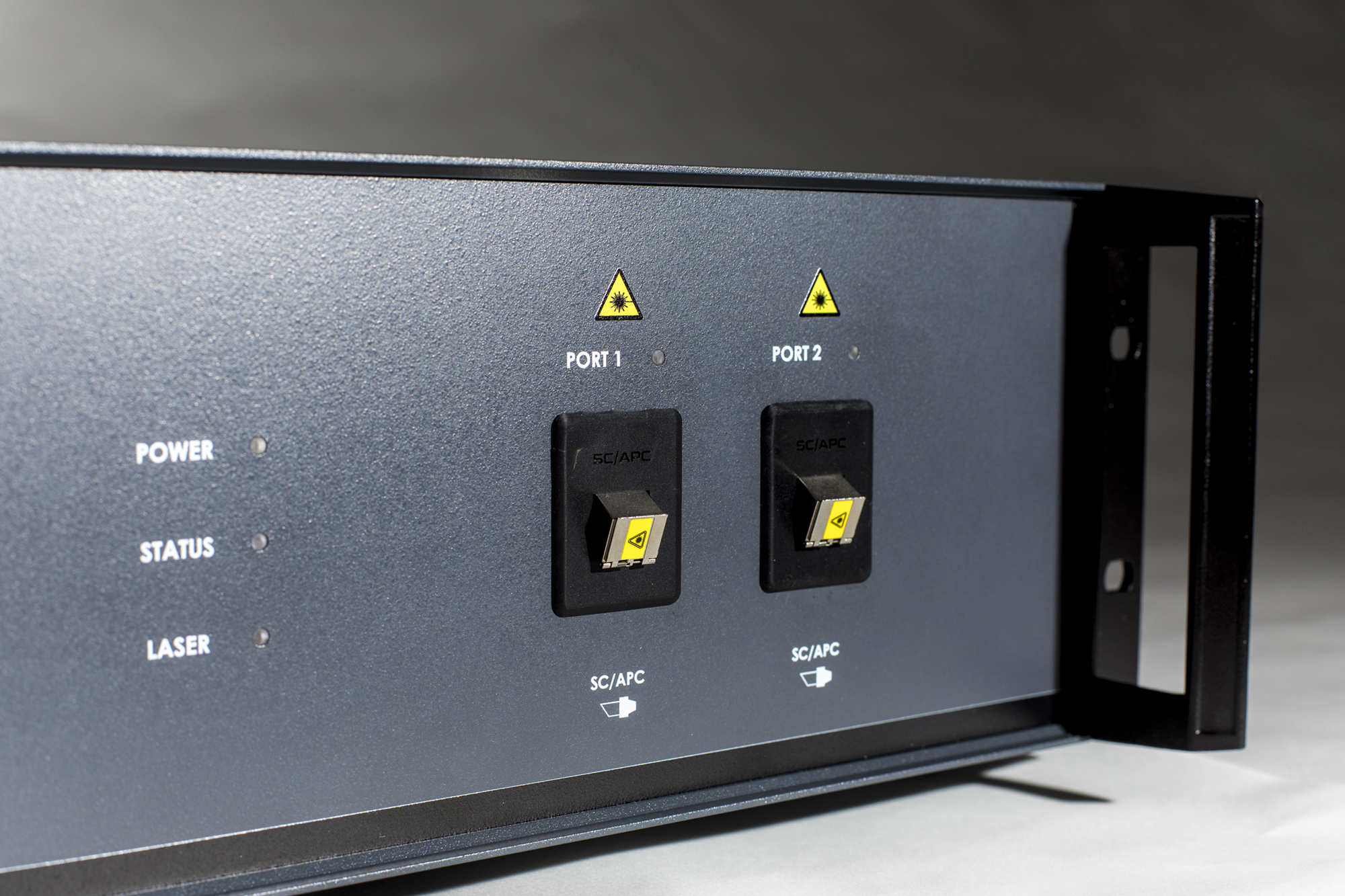
Hardware features

24/365 Ready
- High reliability.
- Redundant ethernet ports.
- Redundant power supplies. (optional)
- Measurement autorecovery under sudden system restart.

Safe
- Class 1 equipment safety compliant.
- Automatic power reduction protocol.

Robust
- Designed for industrial environment.
- Rackable & transportable.
- Hard case available.

Scalable storage
- The system may include extended storage for long term measurements.
- Compatible with network storage.

Reach
- 50 km reach.
Software features

HMI available to operate the PDAS
- Control over measurement parameters.
- Graphic data representation: strain & temperature.

Open Access to instrument response
- PDAS can be controlled remotely via HTTP.
- Fully functional API REST for integration with client applications.
- TCP Stream Data Available.
- HDF5 and SEGY files.

Integrable
- PDAS can be controlled remotely.
- Fully functional TCP/IP protocol for integration with client applications.
